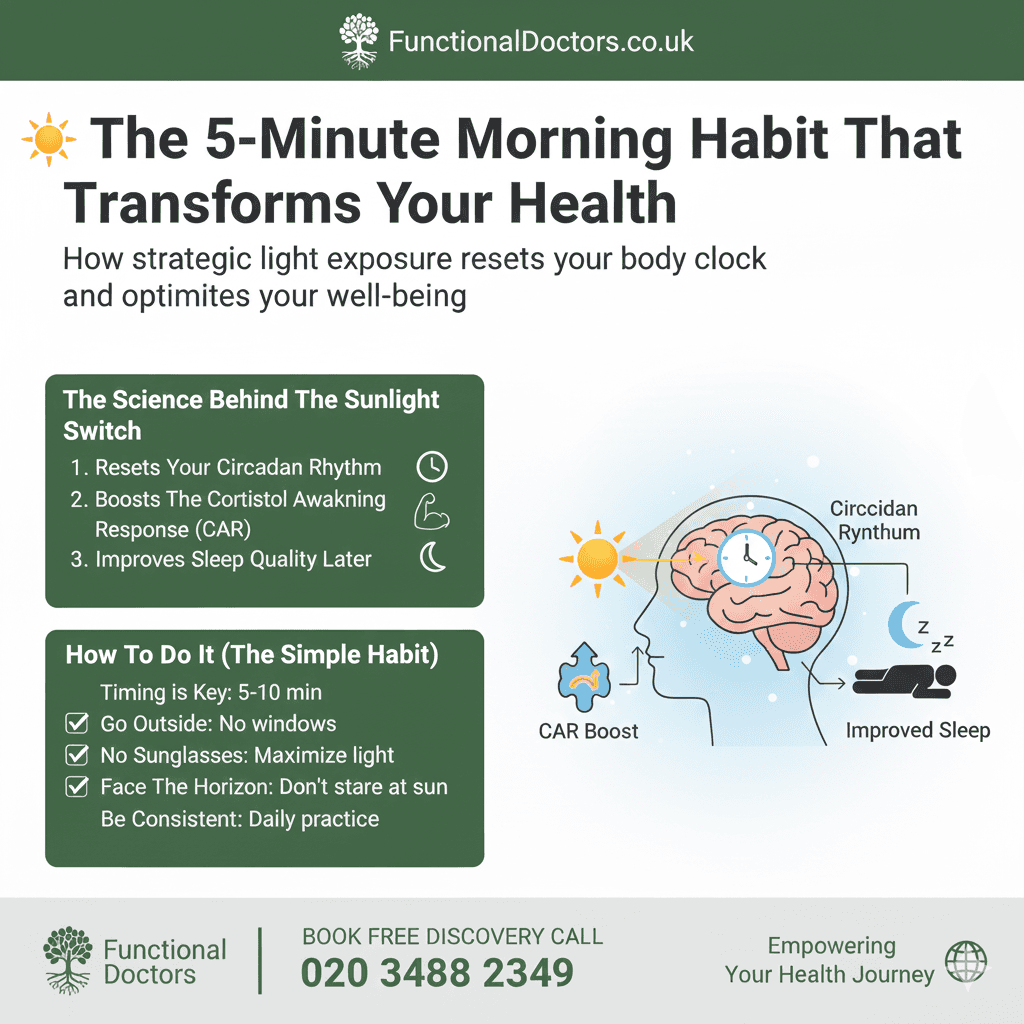
The 5-Minute Morning Habit That Transforms Your Health
Dec 18, 2025

How strategic light exposure resets your body clock and optimises your well-being.
As Functional Doctors, we often discuss the importance of diet, supplements, and gut health. However, one of the most powerful and completely free tools for regulating your entire system is often overlooked: morning light exposure.
It takes just 5 to 10 minutes outside each morning, and the profound effects on your sleep, energy, and overall health are backed by solid science.
The Science Behind the Sunlight Switch
The secret lies in your circadian rhythm, your body's internal 24-hour clock that regulates nearly every biological process, from hormone release to digestion. For optimal health, this clock needs to be accurately set each day.
1. Resets the Circadian Rhythm
When you step outside in the morning, the bright natural light hits the specialised cells in your eyes (independent of vision). This signal travels directly to the suprachiasmatic nucleus (SCN) in your brain, essentially telling your internal clock: "It is day. Start the day cycle."
This early signal is crucial. Without it, your internal clock drifts, leading to imbalances that manifest as low energy, poor mood, and eventual sleep problems.
2. Boosts the Cortisol Awakening Response (CAR)
Cortisol is often labelled the "stress hormone," but in the morning, it is essential. The Cortisol Awakening Response (CAR) is the natural surge of cortisol that occurs shortly after waking. This surge is what helps you feel alert, energised, and ready to focus.
Exposure to morning light powerfully triggers a robust CAR. A healthy CAR is associated with:
Improved focus and productivity throughout the morning.
Stronger immune function.
Better resilience to stress later in the day.
When the CAR is blunted (often seen in chronic fatigue or adrenal dysfunction), you wake up feeling groggy and reach for coffee just to function.
3. Improves Sleep Quality Later
The signal you send to your brain in the morning directly dictates the release of melatonin, the sleep hormone at night.
By confirming "daytime" early on, your body starts a precise timer. Roughly 12 to 14 hours later, the brain can accurately begin releasing melatonin. Without that morning signal, the timing of melatonin release becomes delayed, making it difficult to fall asleep, a common issue known as Sleep Onset Insomnia.
How to Implement Your 5-Minute Morning Reset
It couldn't be simpler to weave this habit into your routine:
Timing is Key: Aim for 5 to 10 minutes of outdoor exposure within the first hour of waking. Earlier is better (ideally before 9:00 AM).
Go Outside: Light filtered through glass (windows, car windshields) blocks the specific wavelengths needed for this effect. You must be outside.
No Sunglasses: Do not wear sunglasses or prescription glasses that block UV light. Contact lenses are fine.
Look Towards the Horizon: You do not need to stare at the sun, which can be damaging. Simply face the general direction of the sunrise or the brightest part of the sky.
This simple habit is a foundational pillar of health that complements any treatment plan. By regulating your body clock naturally, you are giving your body the essential signal it needs to thrive.
Are you struggling with energy slumps, poor sleep, or chronic fatigue? Understanding and addressing fundamental biological rhythms, like your CAR and circadian cycle, is often the first step in a Functional Medicine approach.
If you'd like a free discovery call with Functional Doctors Dr Nicki Gill and Dr Meera Rajah to discover how we can support your personalised health journey, please visit our website and book a call: https://www.functionaldoctors.co.uk/